- 16th January, 2026
- By Rob Lawson
Different, Not Better: Mastering the Art of Unique Marketing
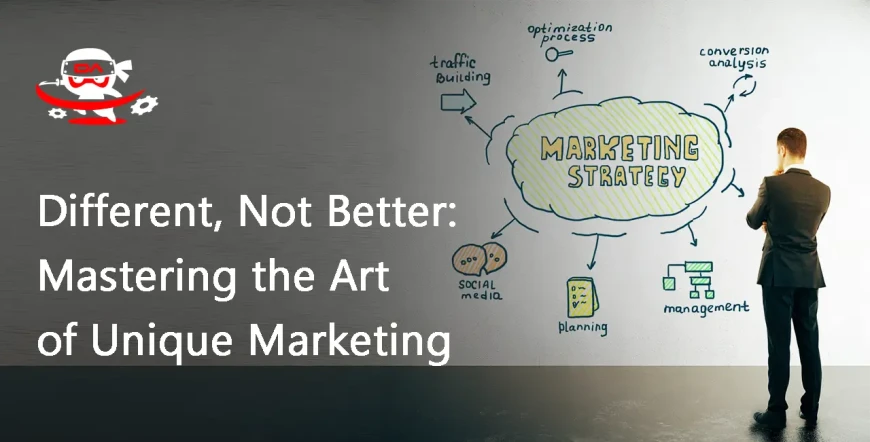
Marketing is constantly evolving, yet many businesses continue to compete by claiming they are simply “better” than their competitors. In today’s crowded digital marketplace, this approach is increasingly ineffective, as buyers are exposed to thousands of marketing messages every day and have limited attention to give. When multiple brands make similar claims, those messages blur together, making it harder for any single brand to stand out.
This is where differentiation becomes the true driver of marketing success. Unlike features, pricing, or incremental improvements, a strong brand identity cannot be easily copied. Customers are more likely to remember and trust brands that communicate a clear point of difference, connect emotionally, and align with their values. As a result, differentiation is no longer just a creative choice; it is a strategic requirement for long-term growth and visibility, supported by a clearly defined and consistently expressed Brand Personality.
Understanding the Nature of Different in Marketing
Why does being different matter so much in marketing? At a fundamental level, human attention is wired to notice contrast and novelty. From an evolutionary perspective, our brains are designed to filter out what feels familiar and focus on what appears new, unexpected, or unusual. This natural behaviour continues to shape how people consume information, evaluate brands, and make purchasing decisions today.
In marketing, this means brands that blend in are easily ignored. When messaging, visuals, or positioning look the same as everyone else’s, potential customers subconsciously tune out. In contrast, brands with a clear, unique selling point cut through the noise by giving audiences a compelling reason to pay attention. Research in consumer psychology consistently shows that novelty and distinct positioning increase recall, engagement, and emotional response.
A classic example is Apple. When the iPhone was first introduced, it wasn’t marketed as just a better mobile phone. It was positioned as a completely new experience with a clearly defined, unique selling point. Touchscreens, app ecosystems, and intuitive design set it apart from everything else on the market. Consumers didn’t switch because of incremental improvements; they switched because Apple offered something new, exciting, and unmistakably different.
The Pitfalls of Being Better
Many businesses fall into the trap of promoting themselves as “better” than their competitors. Phrases like “Australia’s leading provider” or “best-in-class service” are so widely used that they no longer carry real meaning. When every brand makes similar claims, customers are left with little to differentiate them, often defaulting to price comparisons rather than perceived value.
Positioning your brand as “better” also invites direct comparison. It encourages potential customers to evaluate you side by side with competitors based on features, pricing, or minor improvements, areas where advantages are often temporary and easily replicated. This approach can weaken brand perception and reduce long-term loyalty.
Think Different, Not Better
Avoid blending in:
Clearly communicate what sets your brand apart instead of echoing industry clichés.
Redefine differentiation:
Being different doesn’t always mean launching new products, it can be a unique approach, customer experience, delivery model, or philosophy.
Lead with perspective:
Sharing a distinct point of view or story helps create a memorable brand position that customers recognise and trust.
How to Differentiate Your Marketing
Effective differentiation is intentional; it requires stepping back from industry norms and making conscious decisions about how your brand thinks, communicates, and shows up in the market. These decisions shape your brand personality, the distinct tone, values, and behaviours that influence how audiences perceive and connect with you. When your brand personality is clear and consistent, your marketing becomes easier to recognise, trust, and remember. The following steps provide a practical framework to help your marketing stand out in meaningful ways.
Examples of Different Marketing Strategies
A strong example of differentiation in action is Dollar Shave Club. Entering an already saturated razor market dominated by established brands, the company didn’t compete on claims of superior blades or lower prices alone. Instead, it differentiated itself through humour, transparency, and a direct-to-consumer subscription model that challenged traditional industry norms.
Rather than positioning itself as “better,” Dollar Shave Club reshaped how customers thought about buying razors. Its launch campaign used straightforward messaging and unconventional storytelling to cut through advertising fatigue, quickly capturing attention and building brand recognition. This approach demonstrates how a distinct marketing strategy can outperform incremental improvements, even in highly competitive markets.
Watch Dollar Shave Club's viral video to see an example of different marketing in action.
Why Customers Don’t Care About You
This idea may sound confronting, but it reflects a fundamental truth of modern marketing: customers are primarily focused on their own challenges, not brand self-promotion. Claims about being the best or the leading provider rarely resonate unless they clearly connect to real customer outcomes.
What customers do care about is being understood. Brands that demonstrate empathy, acknowledge real-world constraints, and articulate problems clearly are more likely to earn trust. By shifting the focus from bragging to problem-solving, your messaging becomes more relevant and persuasive.
When you clearly show how your product or service fits into a customer’s context and how it helps solve a specific issue, your brand naturally becomes more valuable. In competitive markets, relevance and understanding consistently outperform loud or self-centred marketing.
Conclusion
In a crowded and competitive marketplace, brands that focus on being different are the ones that truly stand out. Being “better” often leads to direct comparison and price-driven decisions, while differentiation creates clarity, memorability, and emotional connection. When your marketing highlights what makes you distinct, it stops blending in and starts shaping how your audience perceives you.
Shifting from superiority-based messaging to meaningful differentiation allows your brand to earn attention rather than compete for it. By focusing on relevance, empathy, and a clear point of difference, your marketing becomes more engaging, more credible, and far more memorable. Different doesn’t just attract interest, it builds long-term brand value.
At Digital Assassin, we help businesses move beyond generic claims and develop marketing strategies rooted in authentic differentiation with effective digital marketing. Through strong positioning, customer-first messaging, and creative execution, we ensure your brand is remembered for what sets it apart. If you’re ready to stop blending in and start standing out, connect with an assassin who can help turn your difference into a lasting competitive advantage.
FAQs
“Different, not better” means focusing on clear brand differentiation rather than claiming superiority over competitors. Instead of competing on features or price, brands stand out by offering a unique perspective, experience, or positioning that is harder to replicate and easier for customers to remember.
Differentiation is more effective because “better” claims often lead to direct comparisons and price-based decisions. When brands are different, they reduce comparison, increase memorability, and create stronger emotional connections, which leads to higher trust and long-term brand value.
Human attention is naturally drawn to novelty and contrast. Consumer psychology shows that people filter out familiar or repetitive messages but respond more strongly to what feels new or unexpected. Differentiated marketing leverages this behaviour to improve recall, engagement, and decision-making.
Positioning as “the best” often results in:
- Blending in with competitors using similar claims
- Increased price competition
- Weak brand loyalty
- Easily replicable advantages
This approach focuses on short-term wins rather than sustainable differentiation.
Businesses can differentiate their marketing by:
- Analysing competitor messaging and identifying category sameness
- Defining a clear and relevant Unique Selling Proposition (USP)
- Shifting to customer-centric, problem-led messaging
- Using underutilised channels or content formats
Effective differentiation is intentional and strategic, not accidental.
No. Differentiation does not always require new products. It can come from:
- A different customer experience
- A unique delivery model
- Strong brand values
- A distinct narrative or point of view
How a brand communicates and shows up often matters more than what it sells.
Customers are focused on their own problems and outcomes, not brand self-promotion. Messaging that demonstrates empathy, understanding, and clear problem-solving is more relevant and persuasive than claims about being the best or the leading provider.