- 18th March, 2026
- By Rob Lawson
Why Storytelling is the Future of Marketing in 2026?

Storytelling marketing has become a critical differentiator for brands, with 84% of consumers admitting that compelling stories impact their purchasing decisions. Given that around 90% of marketers now use generative AI daily, the demand for authentic human narratives has intensified. The number of LinkedIn job postings mentioning 'storyteller' doubled last year, with roughly 50,000 listings under marketing alone. Whether you're working with a content marketing service team or building digital marketing strategies in-house, mastering storytelling is no longer optional. We'll walk you through what makes storytelling marketing effective in 2026, the core elements of successful brand stories, and how to implement this marketing strategy into your campaigns.
The Shift in Buyer Behaviour
Today’s customers are more informed and independent. With easy access to online research, reviews, and comparisons, most buyers complete a large part of their decision-making process before ever contacting a business. They can quickly recognise sales gimmicks or insincerity, which means simply listing product features and benefits is no longer enough. From YouTube unboxings to social media testimonials and online reviews, the stories people encounter online strongly shape how they perceive brands and make buying decisions.

Storytelling makes this influence even more powerful. Research shows stories are 22 times more memorable than facts, with information retention reaching 65–70% compared to just 5–10% for standalone data. Neuroscientist Paul Zak found that well-crafted narratives increase oxytocin levels, boosting empathy and emotional engagement. In 2026, as AI-generated content floods digital channels, authenticity matters more than ever—86% of consumers say authenticity affects the brands they support, and storytelling-driven marketing can increase conversion rates by up to 30% while strengthening customer loyalty.
Core Elements of Successful Storytelling Marketing
Successful storytelling marketing follows a simple narrative structure that keeps audiences engaged and emotionally invested. Most effective stories follow a three-act structure that guides the audience through a clear journey:
Set up :
Introduce the background, context, or situation your audience can relate to.
Struggle :
Present the challenge, pain point, or conflict that creates an emotional connection.
Solution :
Show how the problem is resolved, delivering the key message or outcome.
This structure works because it builds curiosity and emotional involvement while allowing the audience to see themselves in the story.
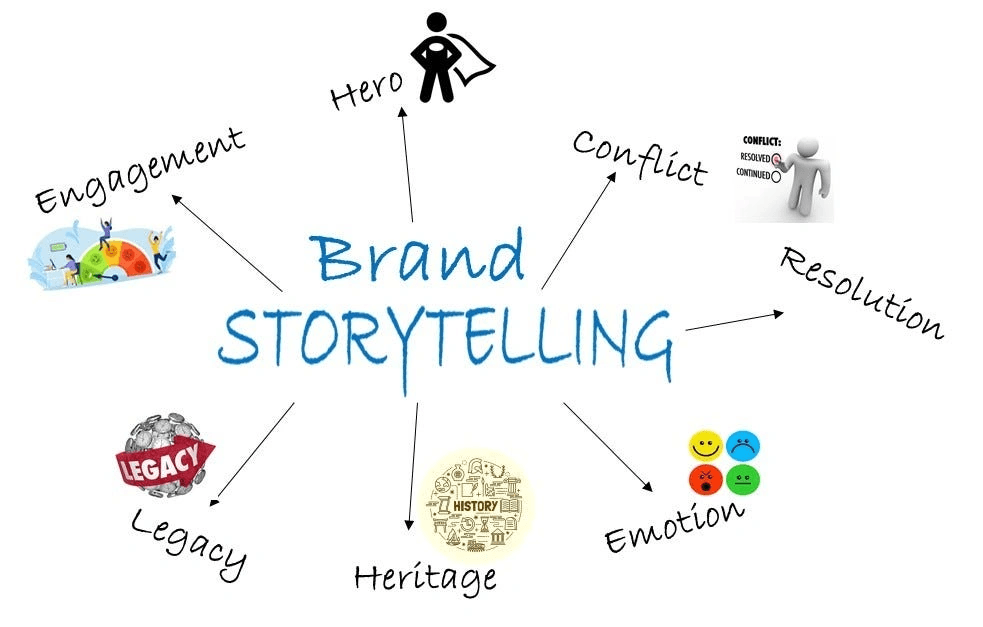
Another key factor is emotional engagement, which makes stories far more impactful than plain information. Research shows that powerful narratives trigger chemicals in the brain that increase empathy and connection. To create stronger storytelling marketing:
Lead with emotion to capture attention and spark interest.
Support with logic and data to build credibility and trust.
Return to emotion to reinforce the message and inspire action.
Stories that combine data with narrative can increase information retention up to 22 times compared to facts alone. Finally, authenticity is essential for meaningful storytelling. Audiences quickly recognise overly promotional or artificial content. Instead of positioning your brand as the hero, focus on the audience and their journey:
Share real experiences and genuine challenges.
Show vulnerability and honesty where appropriate.
Make your audience the hero, with your brand acting as the guide that helps them succeed.
When these elements come together, storytelling marketing becomes a powerful way to build trust, engagement, and long-term brand loyalty. When integrated into broader digital marketing strategies, storytelling also helps brands communicate their value more effectively across channels while creating deeper and more meaningful connections with their audience.
Implementing Storytelling in Your Marketing Strategy
"If your stories are all about your products and services, that's not storytelling. It's a brochure. Give yourself permission to make the story bigger." — Jay Baer, Customer Experience & Marketing Strategist
A good starting point is conducting a brand audit to evaluate how your brand communicates across different channels. This helps identify gaps, inconsistencies, or unclear messaging that may weaken your storytelling.
Once your messaging is clear, storytelling frameworks can help bring structure to your marketing. The Hero’s Journey aligns naturally with the customer journey, from awareness and consideration to decision, retention, and advocacy. Similarly, the StoryBrand framework positions the customer as the hero while your brand plays the role of a helpful guide. Another commonly used structure is PAS (Problem, Agitate, Solution), which creates tension around a problem before presenting a meaningful solution.
Modern storytelling strategies also require a balance between AI capabilities and human creativity. AI can support tasks such as analysing data, identifying audience preferences, and optimising content timing. However, human insight is essential for crafting narratives that feel authentic and emotionally engaging. Using AI to uncover insights while applying human judgment ensures stories remain credible, relatable, and aligned with your brand values. Transparency and editorial oversight are key to maintaining trust while leveraging technology for stronger marketing outcomes.
Case Study: Successful Storytelling
Let's look at a brand like Nike. It doesn’t just sell sneakers; it sells stories—athletes overcoming adversity, everyday heroes who push their limits. When consumers perceive Nike products, they don't just see shoes; they envision themselves achieving greatness. It's a powerful brand strategy.
A Practical Guide to Storytelling
To incorporate storytelling into your marketing:
Identify Your Story: Understand what makes your business unique and how it ties into the lives of your customers.
Engage Your Audience Emotionally: Connect on a human level by showing that you empathise with their needs and struggles.
Make Your Customer the Hero: Craft narratives where your products or services enable customer achievements.
Build Consistency Across Platforms: Ensure your message and story are consistently communicated across all channels.
Conclusion
In 2026, storytelling marketing is no longer just a creative technique; it’s a strategic advantage. As buyers become more informed and selective, brands that communicate through authentic, relatable narratives are far more likely to capture attention and build trust.
It is ultimately about creating genuine connections between brands and their audiences. In a digital environment saturated with automated content, businesses that communicate through authentic and relatable narratives are far more likely to stand out. When brands focus on real experiences, emotional engagement, and clear messaging, they move beyond simple promotion and create stories that audiences remember and trust.
Many experts, such as Digital Assassin, who provide expert content marketing services in Melbourne to businesses, help to craft compelling brand narratives that align with broader marketing strategies and support long-term growth.
FAQs
Storytelling marketing is a strategy that uses narratives to communicate a brand’s message, values, and purpose. Instead of focusing only on product features, brands use relatable stories to connect emotionally with their audience and build stronger relationships.
Storytelling is important in 2026 because consumers are overwhelmed with digital content and AI-generated material. Authentic stories help brands stand out, build trust, and create emotional connections that influence purchasing decisions.
Storytelling influences buying decisions by making information easier to remember and emotionally engaging. Research shows that stories are significantly more memorable than facts alone and can help customers relate to a brand’s message and values.
Effective storytelling marketing usually includes three core elements:
- Setup – introducing the context or situation
- Struggle – presenting a challenge or problem
- Solution – showing how the problem is resolved
This structure helps audiences follow the narrative and connect with the message.
Businesses can implement storytelling by identifying their brand story, focusing on customer experiences, and using consistent messaging across platforms such as websites, social media, and email marketing. Structured frameworks like the Hero’s Journey or PAS (Problem, Agitate, Solution) can help shape the narrative.
A professional content marketing service Melbourne businesses rely on can help develop compelling brand narratives, align storytelling with digital marketing strategies, and create consistent content that improves engagement, brand awareness, and conversions.