- 30th October, 2026
- By Rob Lawson
A Two-Week Digital Detox: Rethinking Social Media Marketing Strategies
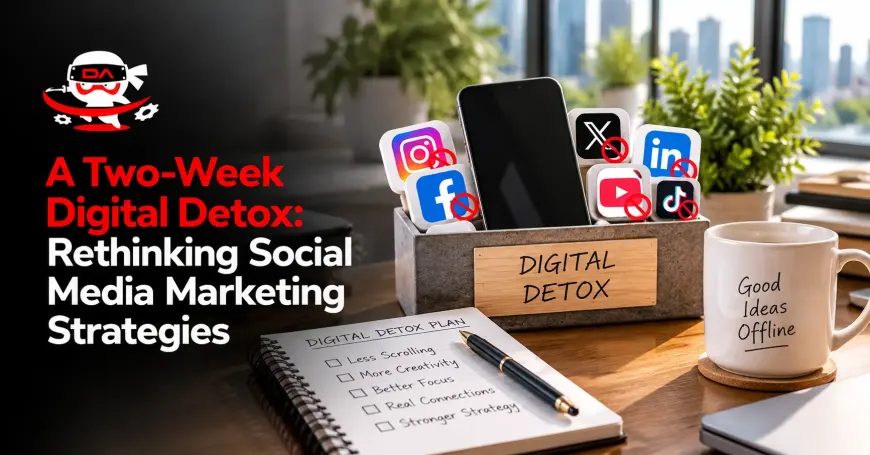
Two weeks without Facebook, Instagram or LinkedIn sounds easy until the habit of checking them disappears. That was the experiment behind this digital detox: a full fortnight away from every platform. It raised a question every business owner should ask: is your social media marketing built on what grows the business, or on what feels good to see?
Here's what a break from the feed showed, and what it means for your digital marketing strategy.
Social media marketing is the use of platforms such as Facebook, Instagram and LinkedIn to build brand awareness, engage audiences, generate leads and support business growth. An effective approach focuses on measurable business outcomes rather than engagement metrics alone.
What a Digital Detox Can Teach Businesses About Social Media Marketing
Social media is a curated version of real life. Feeds are full of holidays, awards and celebration dinners, while the slow, messy parts rarely get posted. Scrolling through that every day can quietly change how you judge your own progress.
Two habits sit behind this:
Approval seeking: Likes and shares influence what gets posted, so content is often shaped by what earns a reaction rather than what's useful.
Selective sharing: Burnt toast and failed DIY projects stay off the feed. Only the wins make it through.
The result is an unfair comparison. You measure your full story, including the unfinished parts, against everyone else's highlights. That affects how you see your own business results, and it can push you towards decisions based on appearances instead of evidence.
For businesses, this can mean copying a competitor's posting frequency, chasing trending formats or investing in platforms simply because others appear successful on them. A more effective approach starts with understanding your own audience and business objectives.
Why Social Media Engagement Doesn't Always Translate Into Business Results
A busy feed feels like progress. But likes, views and follower counts don't automatically turn into trust, enquiries or sales. A competitor with thousands of followers isn't necessarily growing faster than you.
Vanity numbers and useful numbers look quite different:
Vanity metrics: Likes, follower counts and impressions. They show reach, but not whether anyone is interested in buying.
Business metrics: Enquiries, qualified leads, sales and repeat customers. These show whether your marketing is working.
Consider the difference between these social media metrics:
| Social media metric | What it measures | Business relevance |
|---|---|---|
| Likes | Audience reactions | Measures engagement |
| Followers | Audience size | Indicates potential reach |
| Impressions | Content visibility | Measures exposure |
| Website clicks | Traffic generated | Indicates audience interest |
| Enquiries | Potential customers | Measures lead generation |
| Conversion rate | Visitors taking action | Measures effectiveness |
| Revenue | Financial return | Measures business impact |
For example, a local service business might receive 500 likes on a Facebook post but generate only two enquiries. Another post might receive 30 likes but generate eight qualified enquiries.
Although the second post has lower engagement, it could deliver greater business value.
A sound digital marketing strategy services tracks the second group. Social media should support your business goals, not act as a scorecard for how well you're doing.
How to Build Effective Social Media Marketing Strategies
None of this means social media isn't worth your time. Facebook, Instagram and LinkedIn still give businesses access to large, targeted audiences. The difference is using them with a clear purpose.
Effective social media strategies usually include:
Targeted messaging: Interest-based advertising lets you reach people who haven't heard of your brand yet but fit your ideal customer.
Educational posts: Practical advice builds trust and gives people a reason to follow your business.
Clear next steps: Every post or campaign should point somewhere, whether that's a service page, an enquiry form or a booking link.
Consistent tracking: Measure clicks, enquiries and conversions, not reactions alone.
Audience understanding: Identify the platforms your potential customers use and create content that addresses their questions, interests and needs.
A consistent content plan can also help businesses avoid posting simply to stay active. Instead, each post should have a purpose, whether that's building awareness, sharing useful information, addressing a customer concern or generating enquiries.
Businesses looking to improve their online presence can benefit from professional social media marketing services that combine audience research, content planning, campaign management and performance tracking. Having a structured approach helps ensure that social media activity supports wider business objectives.
Organic vs Paid Social Media: Which Approach Should Businesses Use?
Organic and paid social media serve different purposes, and both can contribute to an effective digital marketing strategy.
Organic social media involves publishing content without paying for distribution. It includes educational posts, company updates, customer stories and community engagement. It helps businesses maintain relationships and build familiarity over time.
Paid social media uses advertising budgets to reach selected audiences through sponsored posts, campaigns and targeted advertisements. It can help businesses expand their reach, promote specific services and generate leads.
The right balance depends on your objectives, audience and available budget. Organic content can build long-term engagement, while paid campaigns can support more targeted and immediate marketing goals.
Where Content Marketing and Search Engine Marketing Fit In
Social platforms are only one channel. Reach on them can drop when platform rules change or ad costs rise, so it helps to have other channels working alongside them.
Content marketing gives your social posts something worth sharing. A helpful blog, guide or case study can be reused across platforms and keeps working long after a post drops out of the feed.
For example, a blog answering common customer questions can be shared through LinkedIn, Facebook and email campaigns. It gives audiences useful information while directing interested readers towards relevant pages on your website.
Search engine marketing reaches people who are already looking for what you sell. Paid search captures that intent straight away, while organic search builds it over time.
Used together, the roles are clear. Social media marketing creates awareness, content marketing builds trust, and search engine marketing captures demand from people ready to act.
Each channel supports a different stage of the customer journey. Businesses don't necessarily need to invest equally in every channel, but they should understand how each contributes to their overall marketing objectives.
How to Measure Social Media Marketing ROI
Measuring return on investment (ROI) helps businesses understand whether their social media activity is contributing to meaningful results.
Instead of focusing only on engagement, look at the relationship between your marketing spend, website traffic, enquiries and revenue.
Some useful metrics include:
Cost per lead: How much you spend to generate an individual lead through a campaign.
Conversion rate: The percentage of website visitors or campaign leads who complete a desired action.
Customer acquisition cost: The total cost involved in acquiring a new customer.
Return on ad spend (ROAS): The revenue generated for each dollar spent on advertising.
Lead quality: Whether enquiries are relevant and have a genuine chance of becoming customers.
For example, if a social media campaign generates 20 enquiries, the next step is to assess how many are qualified, how many become customers and what revenue they generate.
This provides a clearer picture of campaign performance than engagement numbers alone.
Tracking website activity and conversions through tools such as Google Analytics 4 can also help businesses understand how social media contributes to website traffic and customer actions.
5 Signs Your Social Media Marketing Strategy Needs Improvement
Not sure whether your current approach is paying off? These signs usually point to a gap between activity and results:
Plenty of engagement, few enquiries: Posts get reactions, but the phone and inbox stay quiet.
No clear goal per platform: You post on every channel without knowing what each one is meant to achieve.
Rising ad costs: You're spending more on social ads to get the same number of leads.
Content with no destination: Posts don't link to useful pages, so interest has nowhere to go.
No consistent performance tracking: Campaigns are running, but there's no clear process for reviewing traffic, enquiries or conversions.
If two or more of these sound familiar, review your digital marketing strategy as a whole before spending more on posting or ads.
What a Digital Detox Teaches Businesses
The biggest gain from two weeks offline was clarity. Without constant notifications, it became easier to focus on tangible work: speaking with customers, refining services and planning campaigns around real goals.
A digital detox doesn't need to last two weeks, and it doesn't mean quitting social media for good. Even a short break can help you:
■Notice which platforms actually bring in enquiries.
■Separate useful activity from habit scrolling.
■Decide what's worth posting and what's just noise.
■Reset how you measure success.
■Spend more time understanding customer needs and improving your services.
For business owners, the lesson isn't necessarily to spend less time on social media. It's to become more deliberate about how that time is used.
A review of your social media activity, campaign performance and website conversions can help identify what's working and where changes are needed.
Making Social Media Marketing Work for Your Business
Social media is a valuable channel, but it isn't a measure of your worth or the only way to grow. The businesses that get the most from it treat it as one part of a wider digital marketing strategy, with every channel judged by the enquiries and sales it produces.
Step back, check what your numbers really say, and focus on what your customers value. A clear strategy, consistent content and regular performance tracking can help turn social media activity into meaningful business opportunities.
Looking for Social Media Marketing Services That Deliver Results?
At Digital Assassin, we help businesses build a stronger online presence through strategic digital marketing. Our social media marketing services focus on understanding your audience, creating engaging content, managing campaigns and measuring performance against your business goals.
Whether you want to improve brand awareness, reach potential customers or generate more enquiries, our team can help you develop a social media strategy that supports your business growth.
Ready to make your social media marketing more effective? Get in touch with Digital Assassin to discuss your marketing goals.
FAQ's
Social media marketing involves using platforms such as Facebook, Instagram and LinkedIn to promote a business, connect with customers and generate enquiries. It helps businesses increase brand awareness, build relationships and support sales through targeted content and advertising.
A digital detox can help business owners reassess their online habits, identify unnecessary social media activity and focus on measurable marketing goals. It encourages a more strategic approach to content creation, audience engagement and campaign performance.
Measure social media marketing through website traffic, qualified enquiries, conversion rates, customer acquisition costs and sales. Engagement metrics such as likes and shares provide additional context, but they shouldn't be the only indicators of campaign performance.
Effective social media strategies include publishing useful content, understanding audience preferences, maintaining a consistent posting schedule, using targeted advertising and tracking conversions. Businesses should select platforms based on where their potential customers spend time.
Content marketing involves creating valuable resources such as blogs, videos and guides to attract and inform audiences. Social media marketing distributes and promotes this content through social platforms to increase visibility, engagement and website traffic.