- 11th September, 2026
- By Rob Lawson
Brand and Customer Experience in the Age of Analog Revival
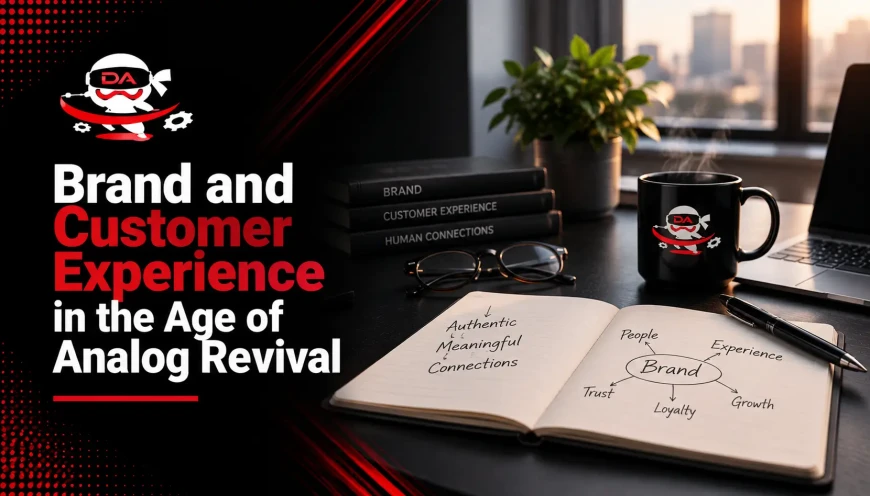
Something interesting is happening to consumer behaviour, and most brands are either missing it entirely or scrambling to catch up. The generation that grew up entirely online is helping lead the charge back to physical experiences. Not because digital is broken, but because it’s everywhere, and everywhere has stopped feeling special.
This is the analog revival. And it has significant implications for how businesses think about brand and customer experience, digital marketing strategies, and where human connection fits into an increasingly automated world.
The rise of AI makes this shift even more interesting. As technology makes digital content, communication and interactions easier to produce at scale, genuinely human experiences can become more distinctive. The more easily technology can replicate a digital interaction, the more valuable an authentic conversation, shared experience or real-world connection can become.
What the Analog Revival Actually Means for Your Brand
Consumer interest in analog experiences isn’t just a passing trend. According to consulting firm Tunheim, it’s a response to mental overload, algorithmic manipulation and the desire to regain control over attention.
That framing matters for brands. The shift towards analog isn’t a rejection of technology. It’s a rejection of experiences that feel impersonal, automated and interchangeable. When every brand runs the same retargeting ads, sends the same email sequences, and optimises the same landing pages with the same AI tools, the brands that create genuine human moments can stand out sharply.
The question isn’t whether to keep using digital channels. Of course you should. The question is whether the brand and customer experience you’re delivering through those channels actually feels like it comes from a business that knows and cares about its customers, or whether it could have been produced by anyone, for anyone, at any time.
Key takeaway: The analog revival isn’t a trend to chase. It’s a signal that brand and customer experience need more human intention behind them, regardless of the channel.
Where Digital Marketing Strategies Are Falling Short
Most digital marketing strategies focus on efficiency. Reach more people, spend less per click, automate follow-up, optimise conversion rates. These are legitimate objectives, and the tools to achieve them have never been more capable.
But efficiency without meaning produces a specific kind of problem. Consumers are increasingly seeking authenticity and emotional resonance in tactile experiences. In response, some brands are embracing imperfect visuals and thoughtful curation to create a stronger sense of genuine connection in a world increasingly shaped by AI-generated content.
When every touchpoint is optimised for efficiency, the cumulative experience can feel cold. Emails that address recipients by first name but clearly weren’t written for them. Social ads that follow someone across platforms after a single search. Chatbots that answer the most common questions but make it difficult to reach a real person when the question is genuinely complex.
None of these is inherently wrong. The problem is when they replace rather than support genuine customer experience thinking. The strongest brands are increasingly finding ways to integrate digital efficiency with meaningful human moments, rather than trading one for the other.
Analog Marketing as Part of a Modern Brand Strategy
Analog marketing doesn’t mean going backwards. It means being deliberate about which physical, in-person or tactile touchpoints create the kind of emotional connection that purely digital interactions can struggle to replicate.
Research into the return to physical experiences suggests that consumers are increasingly turning to physical stores and catalogues not just for shopping, but for inspiration, trust and emotional connection. Those experiences can also shape how customers perceive a brand across its digital channels.
This is the part most digital-first businesses miss. Analog marketing and digital marketing strategies don’t compete. They can reinforce each other. A brand that sends a thoughtfully designed piece of direct mail, hosts a small in-person event or invests in packaging that feels considered creates an impression that can elevate everything the customer sees from that brand online afterwards.
For service businesses especially, this is worth thinking about carefully. The first phone call, the in-person consultation and the handwritten follow-up note can all contribute to the customer experience. These moments may seem small, but they can shape how customers remember and talk about a business far more than another automated email.
AI in Business: Where It Helps and Where It Creates Distance
AI in business has changed what’s possible for customer experience at scale. Personalisation that previously required significant manual effort can now happen automatically. Customer service responses that once took hours can now happen in seconds. Content that would have needed a week to produce can be drafted in an afternoon.
Used well, these capabilities let businesses spend more time on the genuinely human parts of customer experience because repeatable, administrative, and high-volume tasks are handled more efficiently. That’s a genuinely good outcome.
The risk is the opposite: using AI in business to replace human touchpoints entirely because it’s cheaper and faster, without asking whether the customer experience suffers as a result. Research shows that many consumers, particularly younger audiences, want greater control over their digital lives, reinforcing why offline and genuinely human experiences can feel valuable.
A brand that responds to digital fatigue with even more automation, no matter how sophisticated, may be missing the point.
The best use of AI in business for brand and customer experience is to handle what customers don’t notice, so the human effort can go into the moments they do.
Marketing Automation and the Human Touch
Marketing automation is one of the most powerful tools available for scaling customer experience without scaling headcount. Done well, it delivers the right message to the right person at the right moment, which can genuinely improve the experience rather than diminish it.
The problem comes when automation simulates human connection rather than supports it. An email that feels written for the recipient builds trust. An email that clearly wasn’t, but uses personalisation tokens to pretend it was, can do the opposite. Customers are increasingly good at detecting the difference, and the analog revival is partly a reaction to years of the latter.
The discipline that makes marketing automation work for brand and customer experience is the same discipline that makes good analog marketing work: understanding what the customer actually needs at each stage of their relationship with the business, and then designing the experience, automated or otherwise, around those needs.
What This Means for Your Digital Marketing Strategy in 2026
The analog revival doesn’t require a wholesale shift away from digital channels. It requires a more honest assessment of whether the digital marketing strategies in place build genuine relationships or simply optimise metrics.
A few things worth examining:
- ✓
Does the customer experience feel consistent and human across every touchpoint, digital and physical, or does it feel like different systems talking to the same person without coordination?
- ✓
Is marketing automation being used to free up human attention for higher-value moments, or to replace those moments entirely?
- ✓
Are there any analog marketing touchpoints that could create the kind of emotional connection that strengthens how customers perceive the brand across every other channel?
- ✓
Is AI in business being used to improve the customer experience, or primarily to reduce the cost of delivering it?
- ✓
Could your business create more opportunities for customers to experience the brand in person, build community or interact with real people?
- ✓
If AI can increasingly replicate your digital content, what part of your brand experience is genuinely difficult to replicate?
The brands that build the strongest customer relationships over the next few years are likely to be those that answer these questions honestly and act on what they find.
Ready to Build a Brand Experience That Actually Connects?
If your digital marketing strategies generate traffic but not the customer relationships that drive long-term growth, the team at Digital Assassin can help. From marketing automation that actually serves the customer experience to digital strategies built around genuine connection, the work is designed to make the brand feel human wherever the customer encounters it.
Book a Discovery Call to see what that could look like for your business.
Frequently Asked Questions
Analog marketing refers to physical, in-person or tactile touchpoints that create emotional connections outside of digital channels. It's relevant in 2026 because growing consumer interest in physical experiences highlights the value of trust, authenticity and human connection alongside digital engagement.
It reinforces the importance of designing digital marketing strategies around genuine human connection rather than pure efficiency. Brands can combine digital reach with considered human moments to create a more consistent and meaningful customer experience.
By applying AI to repetitive, high-volume tasks that don't require human judgement, while directing the time and attention saved towards the touchpoints that genuinely shape how customers feel about the brand.
Marketing automation can improve customer experience when it delivers the right information at the right time in a way that feels relevant and considered. It can damage the experience when it's used to simulate human connection at scale without understanding what customers actually need.