• Services
    • Discover
    • Customer Persona Development
    • Keyword Analysis
    • Competitor Research
    • Customer Language
    • Messaging
    • Build
    • SEO Content Creation
    • Imagery and Videos
    • Ecommerce
    • Coredna Partnership
    • Design Modification
    • Code Optimisation
    • Core Web Vitals
    • Grow
    • Search Engine Marketing
    • Social Media Marketing
    • Email Marketing
    • Content Marketing and SEO
    • Project X Media Machine
    • Reporting / ROI
    • Backlinks
    • Local SEO
    • Google Ads
    • Remarketing
    • Programmatic Advertising
    • Marketing Automation
  • Industries
    • Car Tinting PPF
  • Packages
    • WaaS Packages
    • Foundation
    • Growth
    • Market Leader
    • SEO Packages
    • Sniper Package
    • Stealth Package
    • Enforcer Package
    • AI Visibility Audit
    • AI Influence - Foundation
    • AI Influence - Authority
    • AI Influence - Leadership
  • Blog
  • About
    • Message From The Assassin
    • The Assassin Team
    • FAQs
    • Contact Us
  • Case Studies
    • Foliage Landscaping
    • iEnergy
    • Peninsula Tint and Paint Protection
    • 1800 BUGGIES
  • 6th May, 2026
  • By Rob Lawson

How AI in Advertising Is Changing Small Business
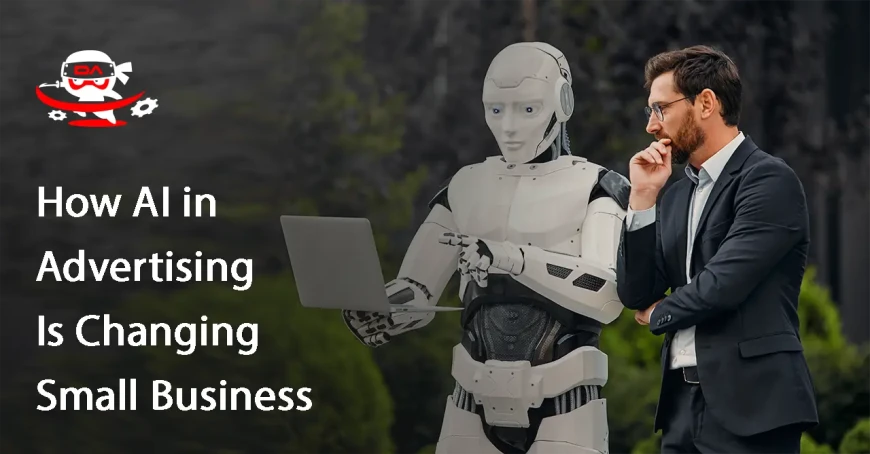
How AI in Advertising Is Changing Small Business

It's 2026, and running a small business has never felt more like a balancing act. Competition is relentless, digital tools keep multiplying, and the costs? They add up fast $20 per seat, five platforms, and suddenly AI feels less like an advantage and more like another monthly bill. 

But something big is shifting. A fierce battle is brewing in the world of AI in advertising, and the outcome could change everything for small businesses like yours. Depending on who comes out on top, this war could either drain your budget further or finally hand you the kind of marketing power that was once reserved for big brands. 

The Big Tech Battle that affects your business

Here's something most small business owners don't realise: the reason AI advertising tools are getting cheaper and more accessible is that the biggest tech companies in the world are fighting over your ad dollars.

Google, Meta, Microsoft, and Amazon are all pouring billions into AI-powered advertising platforms. And when giants compete, the little guy often benefits. Prices drop. Features improve. Tools that once cost thousands are now available for free or at a fraction of the cost.

The flip side? If one company wins this race and corners the market, costs could spike again. That's the gamble. But right now, in this window, the opportunity for small businesses in online advertising and marketing is wider than ever.

And the data backs it up: 59% of SMBs say that digital ads already deliver better ROI than traditional channels like TV, radio, and print. AI is making that gap even wider.

By the Numbers: AI in Advertising & Small Business
83%
of SMBs already use AI in their digital advertising
95%
of SMBs think AI will improve their ad campaigns
82%
of SMBs say digital ads directly drove their 2023 revenue growth
43%
of SMBs expect AI to reduce their overall marketing costs
74%
of SMBs using AI plan to grow in the coming year (Goldman Sachs)

How AI in Marketing is levelling the playing field

Let's talk about what this actually looks like for a small business owner sitting at their desk, trying to figure out where to spend their next advertising budget.

A few years ago, running a targeted campaign required a marketing team, a hefty budget, and weeks of testing. Today, AI in marketing handles most of that automatically. Here's how:

Smart audience targeting

AI analyses browsing behaviour, purchase history, and demographics to show your ads to people who are actually likely to buy, not just random scrollers. 


Automated ad copy

Platforms like Meta Advantage+ and Google Performance Max write and test multiple versions of your ad automatically, picking the one that performs best. 


Real-time budget optimisation

Instead of manually shifting budgets between campaigns, AI does it on the fly, doubling down on what works and pulling back from what doesn't. 


Predictive analytics

AI can identify which customers are most likely to make another purchase, allowing you to focus on retention instead of continually spending on new customer acquisition. 


Personalised ad experiences

AI analyses customer data to create targeted campaigns that speak to specific audience segments, driving higher engagement at lower cost. 

According to LinkedIn’s research on AI for business growth, AI tools can automate bid adjustments and budget allocation across campaigns, directing spend to the areas with the highest impact. This can be done without advanced marketing expertise or a large budget.

Online Advertising and Marketing: What's actually changed?

AI Transformation in Digital Interactions

If you ran ads five years ago, here's what it looked like: you picked an audience, set a budget, wrote your copy, and waited. Then you checked the numbers, tweaked things manually, and waited again. Slow, expensive, and often frustrating.

Online advertising and marketing in 2026 looks very different. The feedback loop is near-instant. Platforms learn from your campaigns in real time and adjust automatically. You spend less time guessing and more time doing what you're actually good at.

The numbers tell the story clearly: 82% of small businesses directly attributed their 2023 revenue growth to personalised ads, according to the Connected Commerce Council's survey. And 69% said they rely on digital advertising specifically to find new customers.

Marketing Strategies for Small Businesses in the AI Era

So what should you actually do about all of this? Here are proven marketing strategies for small businesses that put AI to work without overwhelming your team or your budget.

1

Start with one platform, not five

The biggest mistake small business owners make is spreading themselves too thin. Pick the one platform where your audience actually spends time. Google for search intent, Meta for lifestyle and product discovery, and LinkedIn if you're B2B. Go deep there before expanding. Mastering one channel beats half-hearted efforts on five.

2

Let the algorithm learn

This is counterintuitive for people used to controlling every detail. But modern AI ad platforms actually perform better when you give them more room to work. Broad targeting, automatic placements, and dynamic creatives often outperform tightly controlled manual campaigns. Give it at least two to four weeks before making changes.

3

Use AI for content, but keep your voice

AI tools can write ad copy, generate visuals, and produce video scripts in minutes. But the businesses winning with AI aren't the ones who let it do everything — they're the ones who use it to speed up the process while keeping their own personality and story front and centre. Your authenticity is still your biggest differentiator.

4

Build and own your first-party data

As privacy regulations tighten and third-party cookies continue to phase out, the businesses that own their customer data will have an enormous advantage. Start building your email list, loyalty program, and customer database now. This first-party data becomes the fuel that makes your AI advertising smarter and less dependent on platforms you don't control.

5

Prioritise high-quality leads over volume

AI-powered lead scoring tools analyse behavioural and demographic data to predict which prospects are most likely to convert. Research cited by LinkedIn found that these tools can drive a 9–20% increase in marketing conversions. For a small business, that kind of efficiency can be the difference between a campaign that drains your budget and one that grows your revenue.

6

Track what actually matters

Impressions and clicks feel good, but they don't pay the bills. Use AI analytics tools to track real business outcomes: leads generated, cost per sale, and customer lifetime value. Once you know your numbers, you can make smarter decisions about where to invest next.

Where is all of this headed? 

If you zoom out and look at the bigger picture, the direction is clear: AI in advertising and marketing is moving from "nice to have" to "table stakes." Businesses that figure out how to use these tools effectively without losing their identity will have a genuine competitive edge.

According to LinkedIn's research, the key to long-term success is a simple four-step approach: identify your biggest pain points first, research tools designed for those challenges, pilot one thing at a time, and then measure and expand based on results. That's it - no grand overhaul needed.

The small businesses that thrive in the next five years won't be the ones that spent the most on advertising. They'll be the ones who use AI the smartest to amplify what already makes them great, not to replace it.

Conclusion

AI in advertising isn't coming; it's already here, reshaping how small businesses compete. The battle between tech giants is real, and the outcomes will define the marketing landscape for years ahead.

But the data is clear: small businesses that embrace AI-powered advertising and marketing strategies for small business are already seeing measurable results, more revenue, lower costs, and a stronger foothold in competitive markets.

FAQs

AI in advertising helps small businesses automate targeting, optimise budgets, personalise campaigns, and improve ROI. These tools reduce manual work, lower advertising costs, and help businesses compete with larger brands through smarter online advertising and marketing strategies.

Popular AI marketing tools for small businesses include Google Performance Max, Meta Advantage+, HubSpot AI, Canva AI, and ChatGPT. These tools support automated advertising, content creation, audience targeting, campaign optimisation, and customer engagement without requiring advanced marketing expertise.

AI-powered online advertising is often more cost-effective than traditional advertising because it improves targeting accuracy, reduces wasted spending, and delivers measurable results. AI tools also optimise campaigns in real time, helping businesses achieve higher conversions and better marketing performance.

Effective AI marketing strategies include focusing on one advertising platform, using AI-driven targeting, creating personalised content, building first-party customer data, and tracking conversion-based metrics. These approaches help small businesses improve efficiency, generate qualified leads, and increase long-term revenue growth.

First-party data is important because privacy updates and reduced third-party tracking limit the availability of external audience data. Businesses using customer emails, loyalty programs, and CRM systems can improve AI targeting, personalise advertising campaigns, strengthen customer relationships, and reduce dependence on advertising platforms.

Back Next Post
Photo of Rob Lawson
Rob Lawson Founder

Rob is an experienced digital executive, having had businesses in the online strategy, website development, SEO and content marketing space since 2004. His online marketing consultancy experience has led to website development on platforms such as Drupal, Joomla, Shopify and WordPress / Woo Commerce.

© Copyright 2026 Digital Assassin

Services
  • Discover
  • Build
  • Grow
About
  • Message From The Assassin
  • The Assassin Team
  • Blog
  • Contact Us
  • Privacy Policy
  • SEO Packages - Terms and Conditions
  • FAQs

Packages

  • WaaS Packages
  • SEO Packages
  • AI Visibility Audit
Case Studies
  • Foliage Landscaping
  • iEnergi
  • Peninsula Tint & Paint Protection
  • Google Partner Badge
Website Designed and Developed by Digital Assassin